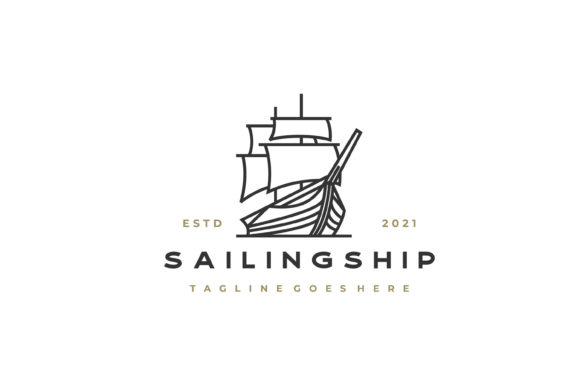
Monoline Sailing Ship Logo Design Review
When I first opened the Monoline Sailing Ship Logo Design, my immediate thought wasn't about stitch counts or file formats. It was about the mood it evokes. There is a specific, nostalgic charm to vintage retro line art that cuts through the noise of modern digital clutter. As someone who has spent years refining designs for real-world embroidery projects, I know that a great graphic doesn't just look good on a screen; it must translate seamlessly into thread. This design hits that mark with surprising grace.
The monoline style is deceptively simple, yet it presents unique challenges when converted into a machine embroidery design. The beauty lies in its consistency, but the execution relies heavily on how well the software interprets those single-weight lines. In this review, I am stepping out of the theoretical realm and looking at exactly how this Logos asset performs when it meets the needle, the hoop, and the fabric of a real client project.
First Impressions: A Vintage Soul in Digital Form
The visual personality of the Monoline Sailing Ship Logo Design is unmistakable. It feels like something you might find stamped on an old wooden crate from the early 20th century or etched onto a brass compass. The lack of heavy fills means the design breathes, allowing the fabric texture to show through rather than being completely obscured by dense stitching. This is a crucial distinction for designers who want their finished products to feel organic and handmade rather than mass-produced.
The layout is balanced and centered, which suggests versatility. Whether you are placing this on the left chest of a work shirt or centering it on a tote bag, the composition holds up. However, the description notes that the text is non-editable. While the vector nature allows for scaling without loss of quality, the inability to change the typography within the original file requires a bit of creative problem-solving if you need to match a specific brand name. Fortunately, the instruction to simply delete and replace the text offers a workaround for those willing to put in the extra minutes during the digitizing phase.
Real-World Application: From Screen to Stitch
Let's imagine a practical scenario. You are preparing for a busy holiday season and have taken orders for personalized gifts. You decide to create a line of custom embroidered aprons featuring a nautical theme for a local bakery or a boutique coffee shop. You pull up the Monoline Sailing Ship Logo Design as your centerpiece. The clean lines suggest a running stitch or a very fine satin stitch outline, which would capture the delicate nature of the ship's rigging perfectly.
On a sturdy canvas tote bag, this design would shine. The open space within the monoline structure prevents the fabric from becoming stiff or warped, a common issue with heavy fill stitches. When the customer receives the bag, the embroidery will lay flat and look crisp. Similarly, for baby clothes, where comfort and softness are paramount, the lightweight nature of this design ensures there is no scratchy bulk against delicate skin. It transforms a simple piece of apparel into a treasured keepsake without compromising the garment's drape.
I also see this design working exceptionally well for small business merchandise. Imagine a set of embroidered patches for a sailing club or a branded cap for a marine supply store. The retro aesthetic adds a layer of authenticity that customers respond to positively. It signals craftsmanship and attention to detail, which builds trust and elevates the perceived value of the handmade product. When buyers see a design that respects the medium of embroidery, they are more likely to pay a premium for the finished item.
Where Caution is Required
While the design is versatile, it is not without its limitations. If you are working with a small hoop size, such as one used for wristbands or tiny baby bonnets, the level of detail in the ship's sails and hull might get lost. Monoline designs rely on the continuity of the line; if the stitch density is too high relative to the size, the lines can merge, creating a muddy appearance that obscures the intended shape. Always test the design on scrap fabric first to ensure the details remain distinct.
Fabric choice is another critical factor. Textured fabrics like bouclé or heavy denim can disrupt the smooth flow of a monoline design. The uneven surface may cause the needle to skip or the thread to catch, resulting in broken stitches. Thin or stretchy fabrics require careful stabilization. Without the right support, the tension required to hold the lines taut could pucker the material, ruining the professional look of the final piece. Dark fabrics present a different challenge; if you do not use a high-quality underlay or a contrasting thread color, the light-colored lines of the ship might disappear into the background.
Curved surfaces, like baseball caps, demand special attention. The distortion inherent in embroidering on a curve can stretch the monoline geometry. What looks perfect on a flat digital mockup might appear distorted once stitched onto the crown of a hat. It is often safer to reserve this design for flatter surfaces like pillow covers, kitchen towels, or flat-fronted garments unless you have advanced experience with curved embroidery techniques.
Design Notes for the Practical Embroiderer
Before you commit this embroidery file to a commercial run, there are several technical checks you must perform. First, verify the stitch density. Even though the source is a vector graphic, the conversion to stitches determines the final outcome. Ensure that the satin stitch angles are appropriate for the curves of the ship, and that the fill stitch areas (if any) are not so dense that they cause puckering.
Check your hoop size against the design dimensions. If the design is large, you may need to split it or reduce the scale, but be mindful of how scaling affects the line weight. A line that is too thin after scaling might not register clearly on the fabric. Also, inspect the small details closely. Tiny corners or intersections in the rigging can sometimes become weak points in the stitching process. Use a proper stabilizer to support the fabric during stitching, especially if you are using a loose weave.
Thread color selection plays a massive role in the visual appeal. Since the design is monoline, the contrast between the thread and the fabric is everything. Test various thread colors on both light and dark backgrounds to see which combination offers the best visibility. Black and white mockups are also essential tools to evaluate the design's silhouette before adding color. If the design works in grayscale, it will almost certainly work in full color.
Finally, consider the licensing terms. If you plan to sell the finished items, confirm that the commercial embroidery license allows for this. Some assets are strictly for personal use. Understanding the rights associated with the digital embroidery file protects your business from legal issues down the road.
Final Thoughts on Value and Versatility
The Monoline Sailing Ship Logo Design is a solid addition to any designer's library, provided you approach it with the right expectations. It excels in projects where a touch of vintage elegance and simplicity is desired. For Etsy sellers, craft fair vendors, and boutique owners, this design offers a way to create unique, recognizable branding without the complexity of intricate floral patterns or heavy shading.
It fits naturally into categories ranging from tote bag design and sweatshirt embroidery to holiday embroidery and personalized gifts. When executed correctly, it enhances the story behind the product, making the finished product feel like a labor of love rather than a generic commodity. By paying attention to fabric choices, stabilization, and stitch settings, you can turn this simple vector graphic into a standout piece of wearable art that resonates with customers and stands the test of time.